We are taking our place as the conceptual shifting in tissue engineering from passive mechanical scaffolds to active, smart biomaterials. By designing piezoelectric microenvironments that mimic the body’s endogenous bioelectric fields, our materials autonomously convert physiological movements into localized electrical signals, driving tissue healing, directing cellular fate, and modulating immune responses without the need for exogenous biochemical factors.
Our research exploits the piezoelectric effect to control cellular behavior across three critical axes:
Healing & Proliferation (Galvanotaxis): Generating micro-electric fields that accelerate the migration of cells to the defect site and stimulate the proliferation of fibroblasts and osteoblasts.

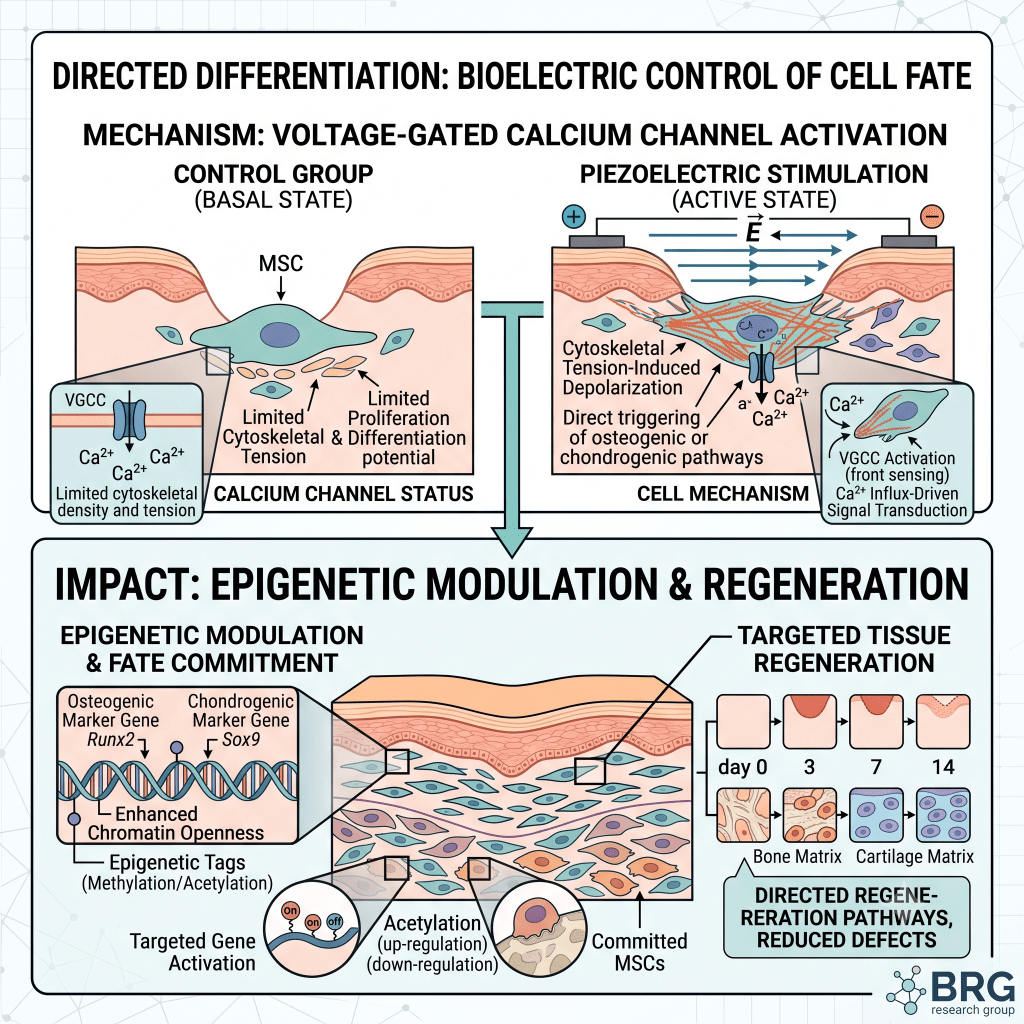
Directed Differentiation: Activating voltage-gated calcium channels and altering cell membrane depolarization to directly trigger osteogenic or chondrogenic differentiation pathways in MSCs via epigenetic modulation
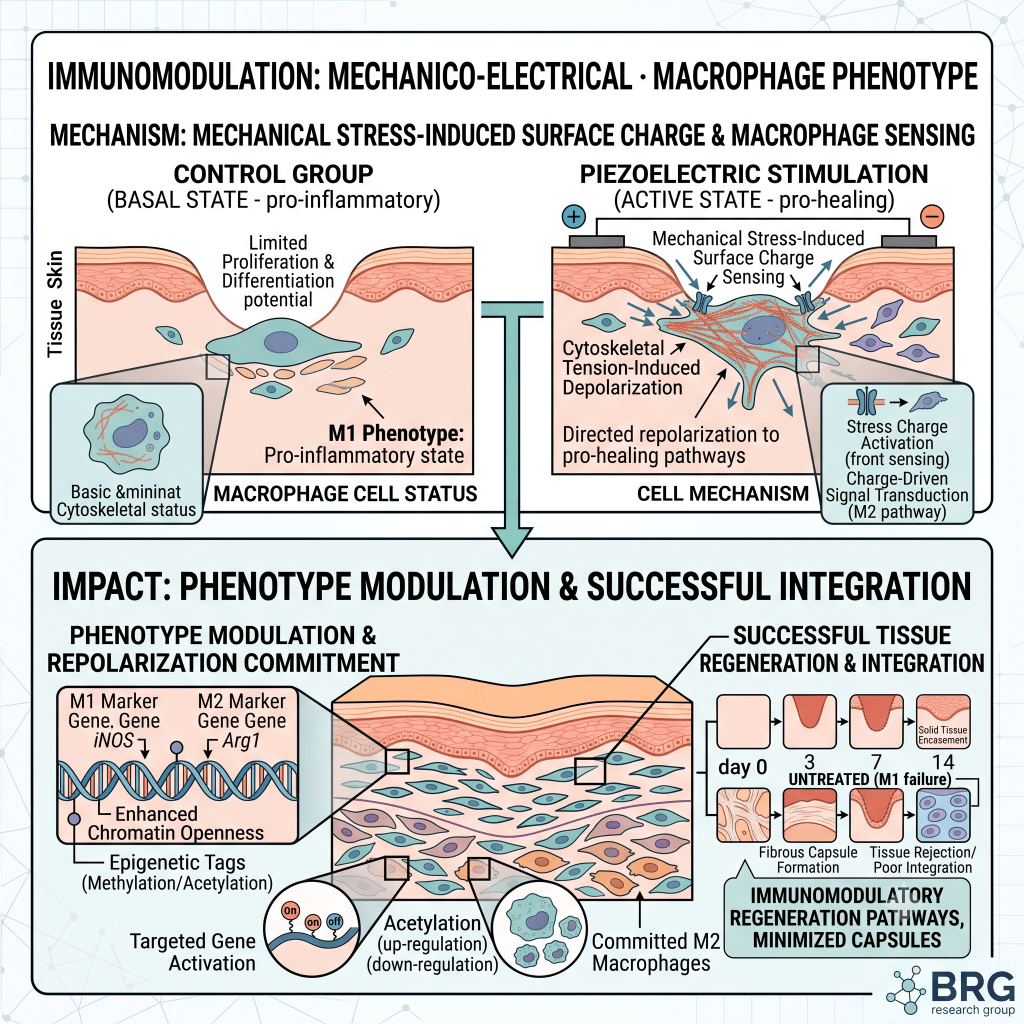
Immunomodulation & Macrophage Repolarization: Utilizing surface charges generated by mechanical stress to drive the repolarization of macrophages from a pro-inflammatory (M1) phenotype to a pro-healing, anti-inflammatory (M2) phenotype, thereby preventing fibrous capsule formation and ensuring successful tissue integration.
.
We develop advanced composites and hybrid systems by synergistically combining different classes of piezoelectric materials:
Inorganic & Ceramic Nanofillers
Utilizing high-performance piezoelectric nanostructures (such as TiO₂ nanorods/nanoplates and BaTiO₃) as electroactive reinforcing agents within softer matrices.
Synthetic Piezoelectric Polymers
Engineering highly flexible and processable polymers like PVDF and its copolymers (e.g., PVDF-TrFE) through techniques like electrospinning to maximize their electroactive Beta-phase crystallinity.
Natural Bio-Piezoelectric Polymers
Leveraging the inherent molecular asymmetry of biopolymers like silk fibroin to create fully biodegradable, highly biocompatible piezoelectric interfaces with natural cell-recognition sites.

