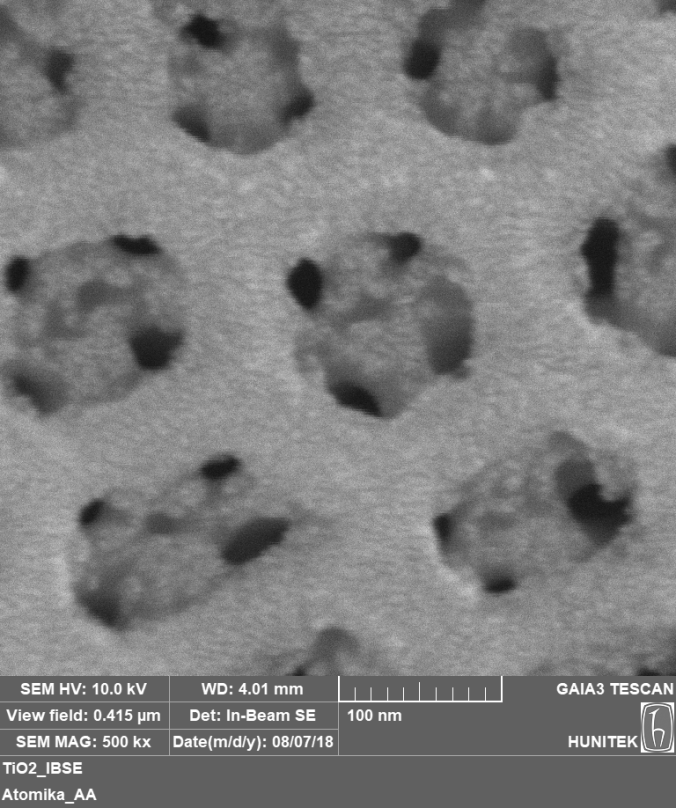
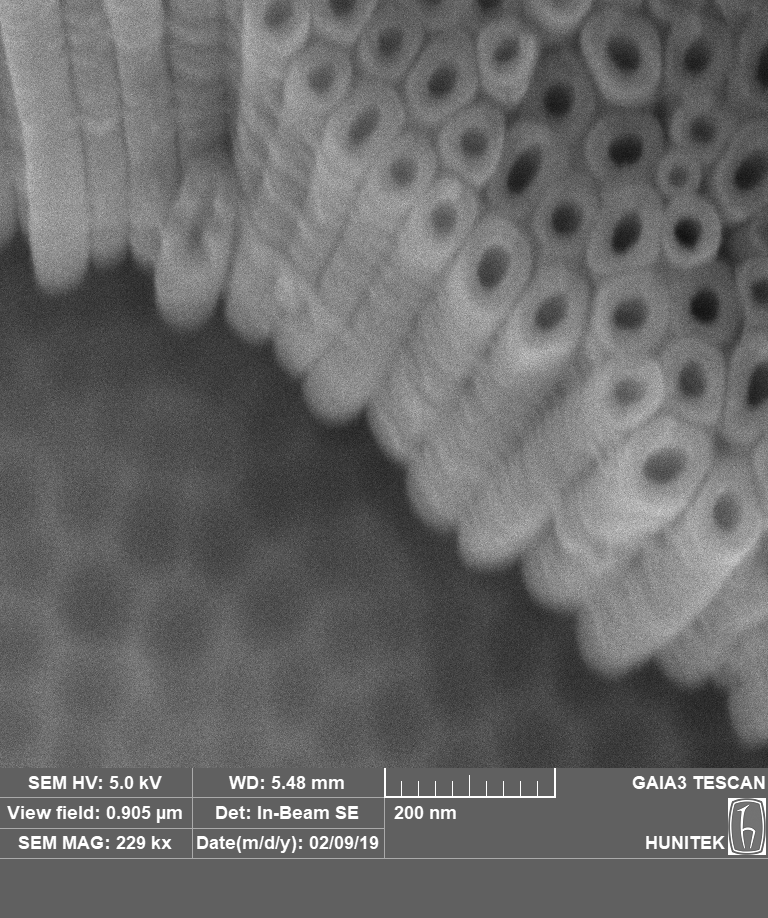
We redesign synthetic implant surfaces to mimic the natural architecture, chemistry, and mechanical properties of the ECM. Our overarching goal is to bridge the gap between inorganic materials and host tissues, creating bioactive interfaces that maximize cellular compatibility and autonomously drive targeted tissue regeneration.
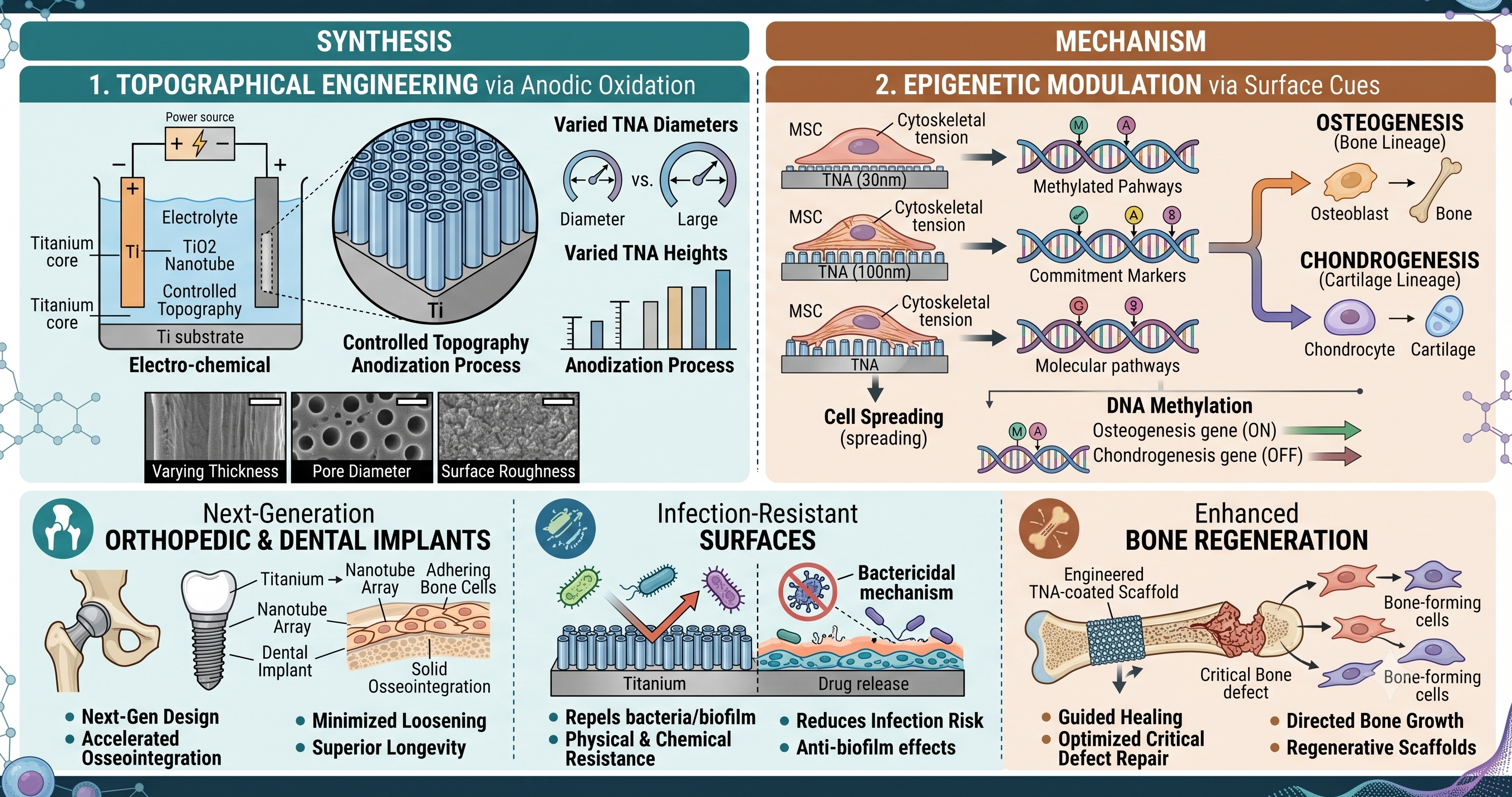
The potential of titania nanotube arrays has not been fully exploited though the ease and low-cost of production. Our research is related with the surface characteristics of diverse porous titania surfaces and their epigenetics effects on mesenchymal stem cells. Our principal research interest areas are the synthesis of ordered titania nanotube arrays by electrochemical anodic oxidation, with varying thickness and morphologies and also control their stand-alone membrane forms for further applications after functionalization of the nanotubes. Additionally, we are currently collaborate with diverse disciplines from electronics engineering to medical genetics in terms of capacitive sensing, water harvesting, implant modification and cell differentiation applications of titanium dioxide nanotube array/surfaces.